
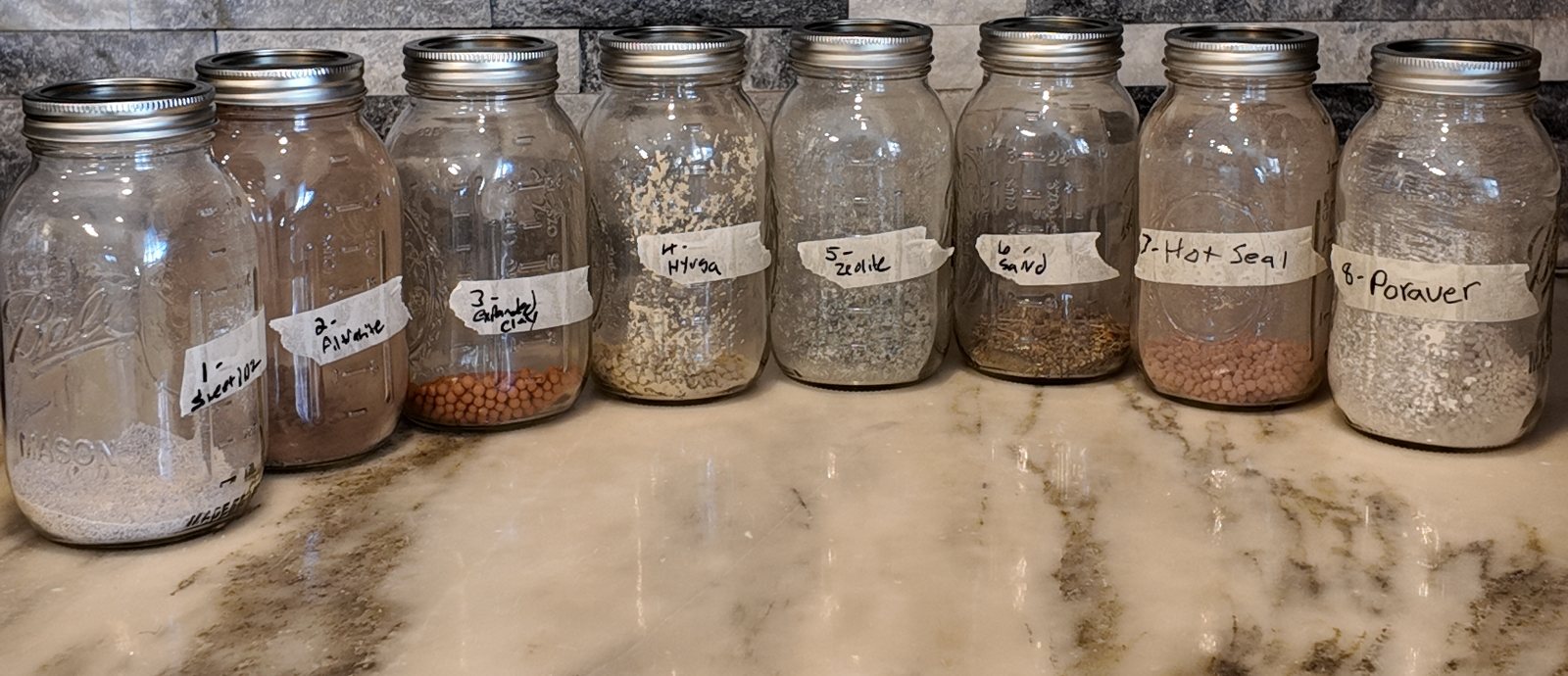
Every test in this trial is built around one simple idea: if it happens in my coop, I want to see it in my lab first. Chickens scratch, boots kick, and scoops bang around. So I put each of the eight trial materials in a mason jar, shook it hard for sixty seconds, dry, and photographed what the shaking created.
Two measurements live on the breakdown question, and they are not the same thing. The first is screen and weigh: sifting out the fines that already exist as shipped and weighing them. The second is this one, the shake test. Sixty seconds of hard shaking measures NEW fines created by mechanical stress. A material can arrive clean and still fall apart under use, or arrive dusty and never get worse. I want both numbers.
Here is what sixty seconds of shaking did to the jars, ranked best to worst by the fines they shed:
- Expanded clay. Best by far. The jar looked nearly as clean after shaking as before. Nothing loose, nothing flaking, not a single broken pellet.
- The porous-grade clay pellet control and Sweet PDZ. Roughly tied, but not the same story. The porous pellet's dust was much finer than the mineral granule's, and fine dust is the kind that stays in the air longer. In a coop, air matters.
- Filtralite and the foamed glass. Visible dust, mid pack. The foamed glass shook out a fine white film on the jar walls plus a settled powder pile at the bottom, and I can scratch its granules under a fingernail. That is why it stays on the durability watch list.
- Zeolite and pumice. The dustiest of the set.
The result that surprised me most is one I did not need the shake test for, though the shake test backed it up. Across weeks of scooping, washing, shaking, and freezing, not one expanded clay pellet has broken. The only one that ever broke was the one I deliberately bashed with a hammer to see what breaking one takes.
One distinction this journal will keep making, because it is the whole category question: the lightweight, porous clay balls sold for houseplants are made to drink water, sponge all the way through. The dense expanded clay in this trial carries a sealed, vitrified shell fired on during production, built to shed water and stay intact. Sixty seconds of shaking shows the difference: a sponge sheds, a sealed pellet does not.
Honest as always about where this sits. Dust is one of three things a challenger cannot lose to sand on, alongside droppings release and odor. This test speaks to dust and durability. It says nothing yet about wet caking or washability, the two things a challenger must beat sand on to advance. The totes outside are where that verdict comes from.
Next entry: the soak test, because the storm is the whole point. Every material goes under water, and I watch what it drinks.